

10 Must-Have Desk Organizers for a Clutter-Free Workspace
The best desk organiser solutions combine vertical storage, cable management, and dedicated zones for different supplies. You need mesh notebook organizers, detachable stationery organiser systems, hidden under-desk drawers, and multi-layer storage racks. These work together to keep your workspace clear and your mind focused.
What Makes a Desk Organizer System Actually Work?
I've watched people buy cute office organizer products for years. Their desks return to chaos within weeks. The difference between decoration and organization is workflow alignment.
A good system positions items exactly where you'll use them. Your dominant hand should reach frequently used tools without stretching. When something doesn't have a home, clutter creeps back in.
The transformation happens when you stop thinking about individual products. Start designing zones instead. Your writing zone needs different tools than your tech zone.
The Essential Desk Organizers That Actually Deliver
1. Metal Mesh Desk Organizer
A quality metal mesh office desk organizer serves as your command centre for daily essentials. The ventilated design keeps supplies visible. The durable construction handles constant use without warping.
Position this on your dominant side for instant access. Pens, scissors, sticky notes, and other tools you reach for dozens of times daily go here. Use the different compartment sizes strategically. Taller sections hold scissors and rulers. Shorter ones work for paper clips and USB drives.
2. 2-Layer Detachable Stationery Organizer
This two-tier system transforms how you think about desktop real estate. The detachable design means you can separate the layers when you need spread-out access. Stack them to maximise vertical space.
I use the top layer for active project supplies. The bottom layer holds backup supplies and less frequently used items. The compartmentalised design prevents everything from migrating into a single chaotic pile.
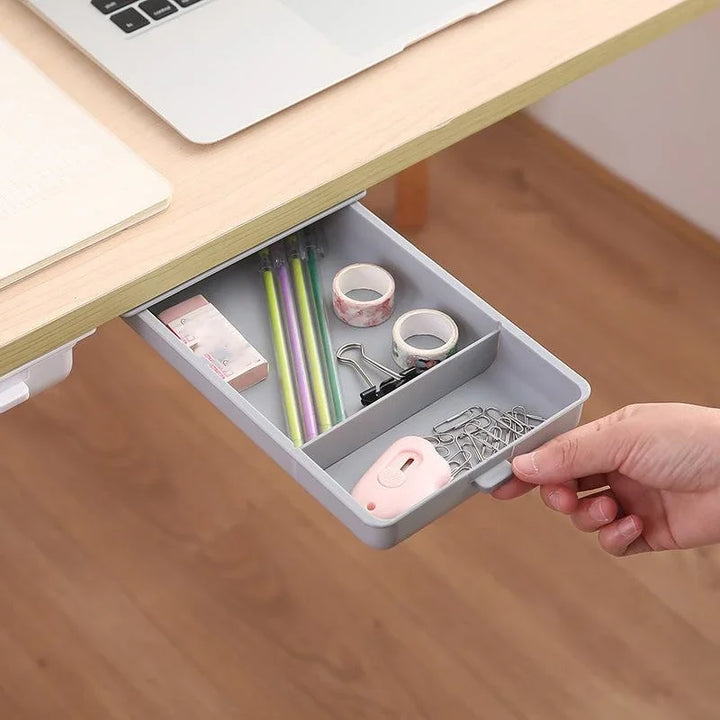
3. Hidden Under-Desk Drawer Organizer
Storage under desk is underutilized real estate. This hidden drawer mounts underneath your desk surface. You get a discrete compartment for items you need nearby but don't want visible.
I keep personal items here. Phone charger, headphones, hand lotion, snacks. For desk for small space situations, this becomes essential. You're creating storage capacity without consuming any visible footprint.
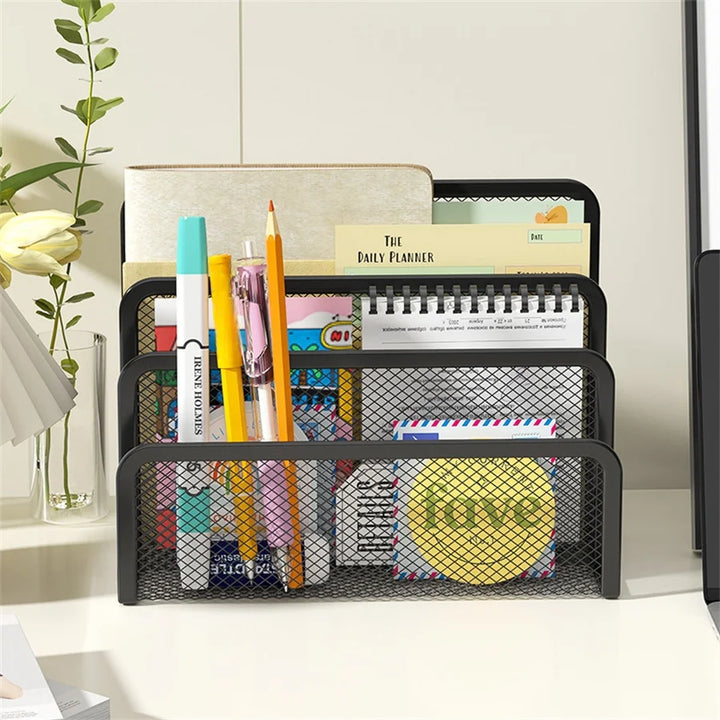
4. 3-Layer Metal Mesh Notebook Organizer
Vertical table organizer solutions multiply your desk capacity. This three-tier mesh system lets you separate urgent documents, reference materials, and completed work. No more visual chaos from scattered papers.
The mesh construction keeps contents visible. You can identify the right notebook or folder at a glance. Position this on your non-dominant side. I keep current projects in the top tier, reading material in the middle, and filing items in the bottom.
5. Office Multifunctional Double-Layer Storage Rack
This multi-purpose rack excels at creating zones within your workspace. The two-layer design lets you elevate monitors or laptops to proper ergonomic height. Then you use the recovered desk space below for active work materials.
For standing desk users, this solves the constant bending problem. Elevate your most-used supplies to a comfortable standing height. Your drawers for standing desks become less critical for everyday items.
6. USB Cable Organizer
Let's address cable chaos. This dedicated cable management system transforms the tangled nightmare most of us tolerate into an organized setup.
The compact design handles multiple cables. Charging cords, USB connections, headphone wires. I position mine at the back corner of my desk. When your workspace isn't visually polluted by tangled cables, your stress levels drop.
7. Adhesive Cable Clips
While the USB organizer handles your central cable station, these adhesive clips manage individual cable routing across your entire desk. Stick them along desk edges, under surfaces, or on walls.
I use these to prevent my phone charging cable from falling behind my desk. One clip positioned at the desk edge keeps the cable head accessible even when nothing's plugged in. The adhesive mounting means no drilling or permanent modifications.
8. Multifunctional Bookshelf
When desk space is limited, vertical wall space becomes your ally. This compact bookshelf provides reference material storage without consuming your working surface.
Position this within arm's reach but off your desk. I use mine for project binders, reference books, and the "might need this week" category of materials. It also works for personal items. A plant, a photo, motivational quotes.
9. Mini Waste Bin with Lid
A dedicated desktop waste bin seems minor. But calculate how many times daily you walk across the room to dispose of something. A lidded bin positioned under or beside your desk eliminates this micro-interruption.
The lid contains odors from food wrappers or coffee cups. I keep mine under my desk on my dominant side. Tissue paper, sticky note mistakes, and packaging materials disappear instantly.
How to Build Your Complete Organization System
Individual products won't transform your workspace. A cohesive system will.
Step 1: The 30-Day Reality Check
Place everything in boxes except absolute essentials. For 30 days, only remove items as you genuinely need them. What remains untouched after a month doesn't deserve prime desk space.
Step 2: Zone Your Workspace
Divide your desk into functional zones. Active work zone (centre, dominant hand side). Reference zone (non-dominant side, arm's reach). Storage zone (requires standing or reaching). Tech zone (power outlets, cable access).
Step 3: Match Organizers to Zones
The Metal Mesh Desk Organizer goes in your active zone. The 3-Layer Notebook Organizer handles your reference materials. The Hidden Under-Desk Drawer creates concealed storage for personal items.
Step 4: Implement One Zone at a Time
Start with your active work zone. The area that impacts productivity most. Spend a week with just that improvement. Once it becomes automatic, expand to the next zone.
Common Mistakes That Undermine Desk Organization
-
Buying Everything at Once - Start with your biggest pain point. For most people, that's cable chaos. Grab the USB Cable Organizer and Adhesive Cable Clips. Once that's solved, address the next frustration.
-
Organizing Before Decluttering - Creating beautiful homes for stuff you don't need just makes it neat trash. Be ruthless in the decluttering phase. Your desk should only house tools you actively use.
-
Ignoring Your Actual Habits - Design systems around your real behaviour. Not aspirational behaviour. If you tend to leave things out, you need more open organizers. If you prefer concealed storage, the Hidden Under-Desk Drawer works better.
- Creating Too Many Categories - Organizing 47 different supply types into micro-categories creates decision fatigue. Aim for 5-8 broad categories maximum.
Conclusion
Start small. Choose the one organizational pain point that bothers you most. Cable chaos? Grab the USB Cable Organizer and Adhesive Cable Clips. Paper clutter? The 3-Layer Metal Mesh Notebook Organizer transforms your reference materials. Scattered supplies? The Metal Mesh Desk Organizer becomes your command centre.
Solve just that one problem. Get it working. Make it habitual. Then address the next frustration.
For quality office organizer solutions that combine functionality with thoughtful design, explore the complete collection at Kevin's Toolery Office Organizers. Practical workspace tools meet professional aesthetics. All backed by hassle-free returns and responsive customer support.
FAQs
Q. How many desk organizers do I actually need?
Most productive workspaces use 3-5 core organizers. One for active supplies. One for documents. One for cable management. One under-desk storage unit. Start with your biggest frustration and address that first.
Q. What's the difference between cheap and quality desk organizers?
Quality organizers feature durable construction. Metal mesh versus thin plastic. Stable bases that don't tip during use. The metal mesh organizers handle constant daily use without warping. Cheap organizers fail within 6-12 months.
Q. Should I organize by project or by item type?
Item-type organisation works better for most people. Keep all pens together, all notepads together, and all cables together. You always know where to find items regardless of which project needs them.
Q. How do I maintain organization long-term?
Build a daily five-minute desk reset into your routine. I do mine at day's end. Return items to their designated organizers. Weekly, spend 15 minutes doing a deeper reset. Monthly, audit whether your system still matches your workflow.
Q. Can desk organization actually improve productivity?
Research indicates an organized workspace reduces task completion time by 15-25%. The main reason is eliminating search time and decision fatigue. Organization reduces stress hormones measurably. This improves sustained focus.
Q. What organizers work best for creative versus administrative work?
Creative work needs visible, accessible supplies. Open mesh organizers and detachable systems you can spread out. Administrative work benefits from concealed, categorised storage. Hidden drawers and closed systems that minimise visual distraction.
How to Choose the Right Office Organizer for Your Workspace
How to Choose the Right Bathroom Organiser for Your Vanity/Under-Sink
Related Posts

The Ultimate Kitchen Organization Checklist Before You Renovate or Move

Top 10 Home Organizers Under $50 That Transform Your Space

How to Choose the Right Bathroom Organiser for Your Vanity/Under-Sink

How to Choose the Right Office Organizer for Your Workspace

Sustainability in Home Organization: Eco-Friendly Storage Solutions for 2025
